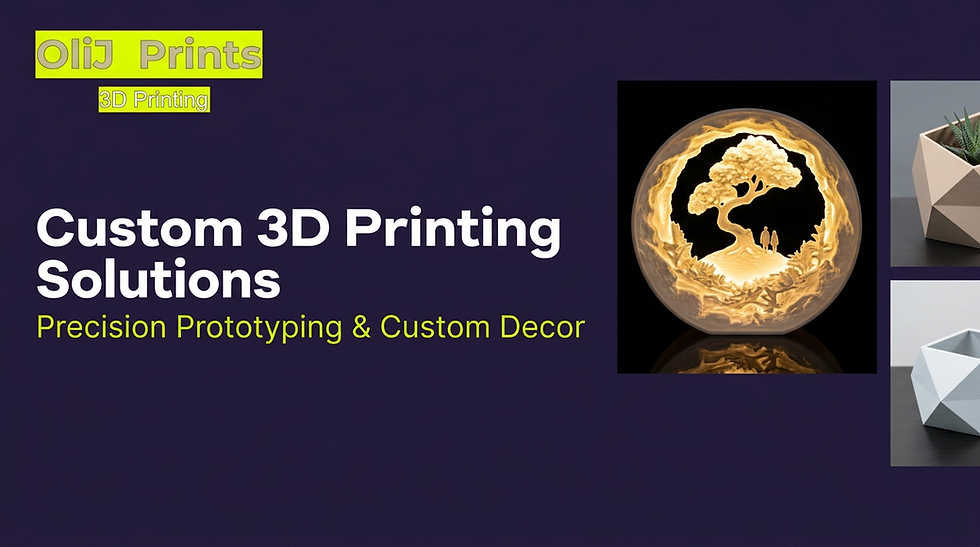
Crafting Custom 3D Designs for Unique Projects
Creating something truly unique requires more than just off-the-shelf products. Whether you are an artist, engineer, entrepreneur, or hobbyist, personalized 3D design solutions open up a world of possibilities. These solutions allow you to bring your ideas to life with precision and creativity, tailored exactly to your needs. This blog post explores how custom 3D designs can transform your projects, practical tips for working with designers, and what to expect in terms of cost and process.
Unlocking the Power of Personalized 3D Design Solutions
Personalized 3D design solutions provide a tailored approach to creating objects, prototypes, or parts that fit your exact specifications. Unlike generic models, these designs are crafted to meet your unique requirements, whether for functionality, aesthetics, or both.
Why Choose Personalized 3D Design?
Precision Fit: Custom designs ensure parts fit perfectly, reducing errors and improving performance.
Unique Aesthetic: Stand out with designs that reflect your style or brand identity.
Functionality: Tailor features to solve specific problems or enhance usability.
Rapid Prototyping: Quickly iterate and refine your ideas before mass production.
For example, a product designer might create a custom ergonomic handle for a tool, improving comfort and efficiency. An artist could design a one-of-a-kind sculpture with intricate details that standard models cannot replicate.
How to Get Started
Define Your Project Goals: Understand what you want to achieve with your design.
Sketch or Describe Your Idea: Even rough sketches or detailed descriptions help designers understand your vision.
Choose the Right Materials: Depending on the use, select materials that offer durability, flexibility, or aesthetic appeal.
Collaborate with a Designer: Work closely with a 3D designer to refine your concept.

Practical Tips for Working with Personalized 3D Design Solutions
Collaborating effectively with a 3D designer or service provider is key to a successful project. Here are some actionable recommendations:
Communicate Clearly
Use visuals like sketches, photos, or reference objects.
Specify dimensions, colors, and textures.
Discuss the intended use to guide material and design choices.
Understand the Design Process
Initial concept and rough drafts.
Iterative revisions based on feedback.
Finalizing the design for printing or manufacturing.
Use the Right Tools
Software like Blender, Tinkercad, or Fusion 360 can help you visualize ideas.
Online platforms often provide templates or customization options.
Plan for Post-Processing
Some designs may require sanding, painting, or assembly after printing.
Factor in time and cost for these steps.
By following these tips, you can ensure your project runs smoothly and meets your expectations.

How much does it cost to get someone to 3D print something?
Understanding the cost of 3D printing services is essential for budgeting your project. Several factors influence the price:
Material Type
PLA and ABS: Common, affordable plastics.
Resin: Offers higher detail but costs more.
Metal or specialty materials: Significantly higher prices.
Size and Complexity
Larger objects require more material and time.
Complex designs with intricate details take longer to print.
Printing Technology
FDM (Fused Deposition Modeling) is generally cheaper.
SLA (Stereolithography) and SLS (Selective Laser Sintering) offer higher quality but at a premium.
Additional Services
Design assistance or modifications.
Post-processing like polishing or painting.
Shipping and handling.
Typical Price Ranges
Small, simple prints: $10 - $50
Medium-sized, detailed prints: $50 - $200
Large or complex projects: $200 and up
For example, a custom phone case might cost around $30, while a detailed architectural model could exceed $500.

Integrating Custom 3D Design into Your Workflow
Incorporating custom 3d design into your project workflow can streamline development and enhance creativity. Here’s how to make the most of it:
Early Stage Ideation
Use 3D modeling to visualize concepts before investing in physical prototypes. This helps identify design flaws early.
Prototyping and Testing
Print prototypes to test form, fit, and function. Adjust designs based on real-world feedback.
Final Production
Once the design is perfected, use 3D printing for small batch production or create molds for mass manufacturing.
Marketing and Presentation
Showcase your designs with high-quality 3D renders or physical models to attract clients or investors.
Collaboration and Feedback
Share digital models with team members or clients for input, speeding up decision-making.
By embedding custom 3D design into your process, you can reduce costs, save time, and improve product quality.
Exploring Future Trends in Personalized 3D Design Solutions
The field of personalized 3D design is evolving rapidly. Staying informed about emerging trends can help you leverage new opportunities.
Advances in Materials
Biodegradable and eco-friendly materials.
Conductive and smart materials for electronics integration.
Improved Software Tools
AI-assisted design for faster iterations.
Cloud-based collaboration platforms.
Enhanced Printing Technologies
Multi-material and color printing.
Faster print speeds with higher resolution.
Customization at Scale
Mass customization allowing personalized products at affordable prices.
Integration with augmented reality for virtual try-ons.
Sustainability Focus
Recycling of 3D printed materials.
Energy-efficient printing processes.
Embracing these trends will keep your projects innovative and competitive.
Personalized 3D design solutions offer unmatched flexibility and creativity for unique projects. By understanding the process, costs, and best practices, you can harness the full potential of this technology. Whether you are creating prototypes, artistic pieces, or functional parts, custom 3D design empowers you to bring your vision to life with precision and style.

Comments